Various genres of development methodologies allow clients to collaborate with us in a simpler and easier way as per their requirements and specifications. Below are popular development methodology we follow.
Agile Development Methodology
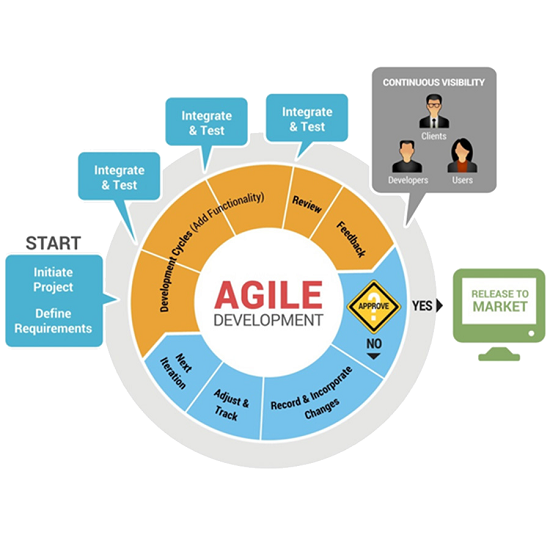
The Agile methodology was developed as a response to growing frustrations with Waterfall and other highly structured, inflexible methodologies. This approach is designed to accommodate change and the need to produce software faster.
Unlike Waterfall, Agile is well equipped to handle the complexity and variability involved in development projects.Using the Agile approach, teams develop in short sprints or iterations, each of which includes a defined duration and list of deliverables, but in no particular order. During sprints, teams work towards the goal of delivering working software.
Agile is collaboration-heavy, focusing on team strengths and efficiency, along with internal feedback from various departments and clients. Client satisfaction is the highest priority with the Agile approach, which teams achieve by continuously delivering working, tested, prioritized features.
SCRUM Development Methodology
The Scrum Development Methodology can be applied to nearly any project. This process is suited for development projects that are rapidly changing or highly emergent requirements.
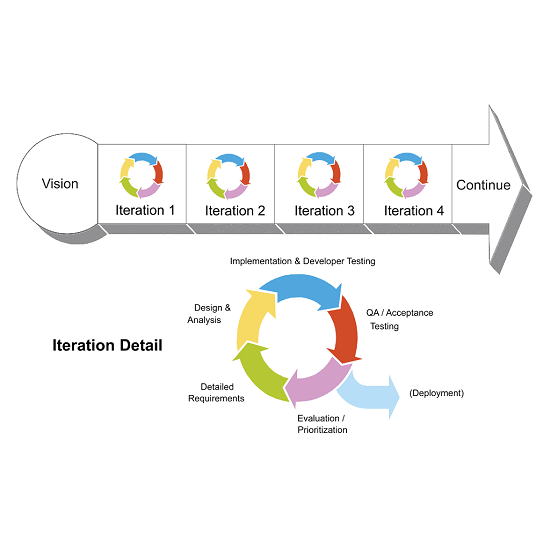
The Scrum software development model begins with a brief planning, meeting and concludes with a final review. This development methodology is used for speedy development of software which includes a series of iterations to create required software.
With Scrum, software is developed using an iterative approach in which the team is front and center—experienced and disciplined workers on smaller teams might find the most success with this method, as it requires self-organization and self-management.
Waterfall Development Methodology
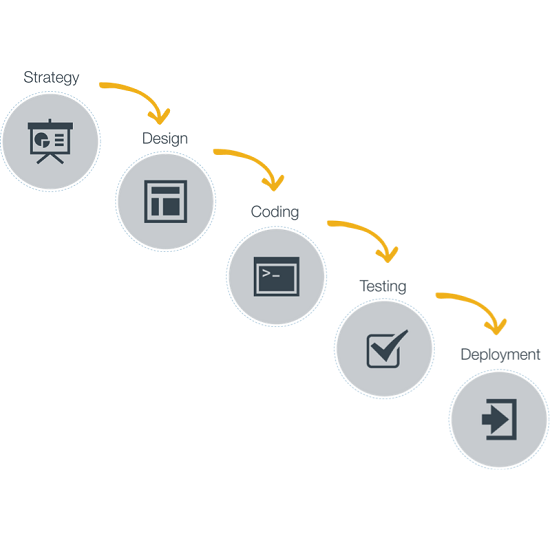
The waterfall model is one of the most traditional and commonly used software development methodologies for software development. This life cycle model is often considered as the classic style of the software development.
Waterfall requires plenty of structure and documentation up front. It is divided into self-contained stages or steps. The first stage is vital, requiring a full understanding by both developers and customers of the project’s demands and scope before anything begins.
There’s a lack of flexibility with this approach, meaning what is decided by the customer and developer at the beginning must be seen through. Should any changes need to be made or mistakes addressed toward the end stages, the Waterfall method generally requires a full restart.